§ How-To
How to Choose the Right Edger Blade Size and Center Hole
Cover blade diameter, thickness, mounting hole size, and platform compatibility across major edger brands. Show how the right blade improves cut quality, edge definition, and machine performance.
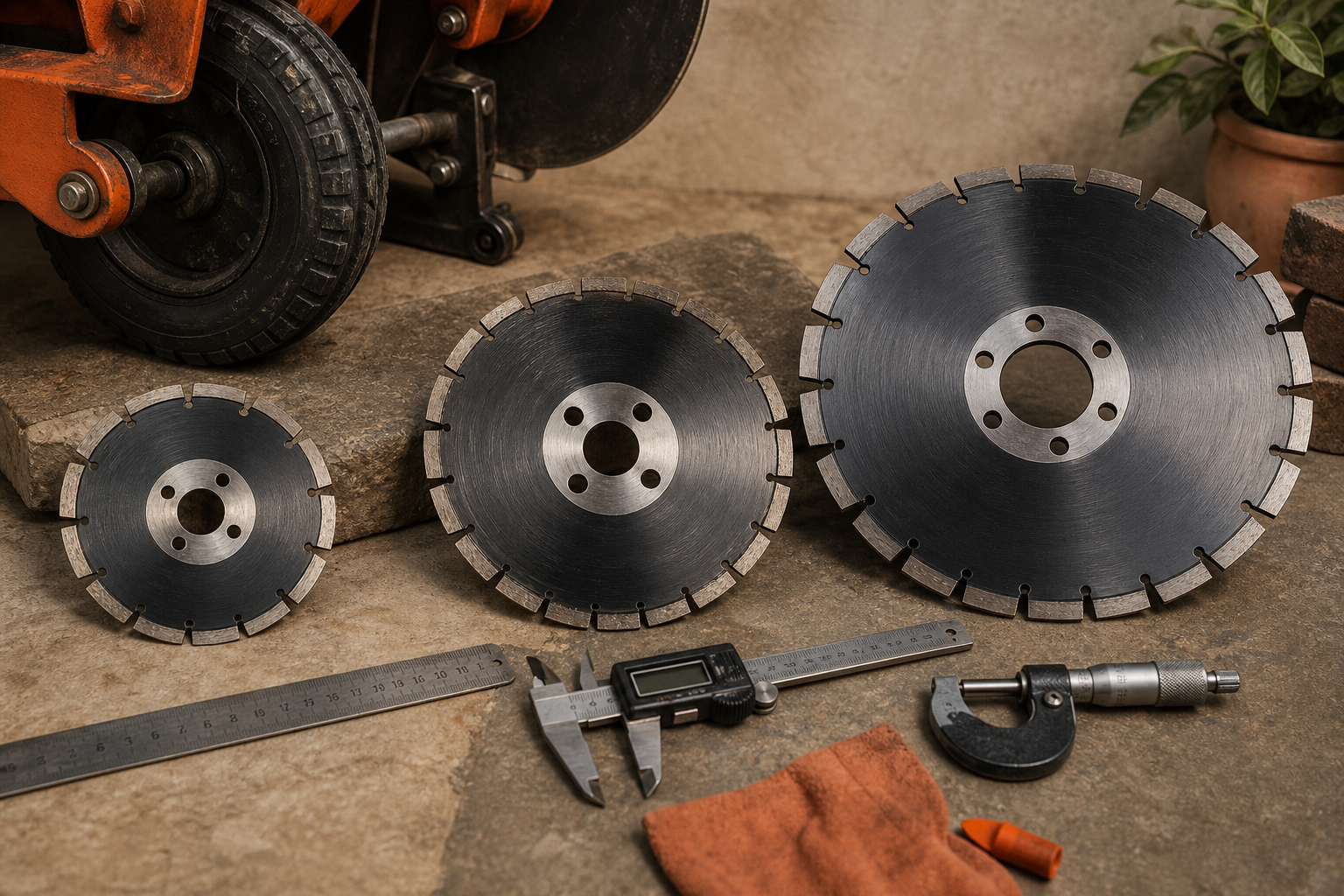
A clean edge starts with the right blade, not just a sharp one. If your edger is leaving a ragged trench, vibrating more than usual, or wearing blades too quickly, there’s a good chance the replacement blade doesn’t match the machine as closely as it should. The two measurements that matter most are blade diameter and center mounting hole, but thickness, offset, and brand-specific fit also affect performance. When you match those details correctly, you get cleaner edge definition, steadier machine operation, and less strain on the spindle, belt, and engine.
Start with the Three Fit Dimensions That Matter
When replacing an edger blade, check the old blade and your operator’s manual for three key specs: diameter, thickness, and center hole size.
Blade diameter determines cutting depth and how the machine rides along the edge. Common edger blade diameters include 7-3/4 inch, 8 inch, and 9 inch, with some commercial units using other sizes. A larger blade can cut deeper, but only if the machine was designed for it. Installing a larger diameter than specified can cause guard interference, poor balance, or overload the drivetrain. A smaller blade may fit, but it can reduce cutting depth and make it harder to maintain a crisp edge along sidewalks and driveways.
Blade thickness affects durability, stiffness, and how aggressively the blade holds a straight line in compacted soil. Many edger blades fall around 0.090 inch to 0.125 inch thick. Thinner blades can cut easily in light maintenance work, but they wear faster and may deflect more in tough ground. Thicker blades typically last longer and track better, but they add rotating mass. That’s usually fine if the machine is built for it, but going too thick can reduce startup response and put extra load on smaller homeowner-grade edgers.
Center hole size is the dimension that determines whether the blade actually mounts safely on the spindle. Typical mounting holes include 1/2 inch, 5/8 inch, and 1 inch, though some blades use slot or combo patterns to fit multiple machines. This measurement must match the arbor or spindle hardware exactly unless the blade is specifically designed as a multi-fit replacement. Too large and the blade won’t center correctly. Too small and it simply will not install.
Why Correct Sizing Improves Cut Quality and Machine Performance
An edger blade does more than just spin through soil. It acts like a guide, helping the machine stay planted in the groove and cut a consistent line. When the size is correct, the blade enters the edge cleanly, carries momentum smoothly, and clears debris without excessive chatter.
A proper diameter gives you the intended cut depth and edge profile. That matters when you are re-establishing overgrown borders or maintaining a sharp separation between turf and concrete. If the blade is undersized, the machine may skim the top rather than cut a defined trench. If oversized, it may dig too aggressively or contact the guard.
A proper thickness helps maintain a straight cut. In hard-packed soil, a blade with enough rigidity is less likely to wander. That produces better edge definition and reduces the need for repeat passes. Landscapers especially notice this when edging long runs of curb or sidewalk where consistency matters.
A proper center hole fit reduces wobble and vibration. A blade that mounts off-center can create uneven wear, rough operation, and extra stress on bearings and spindle hardware. That vibration is not just uncomfortable; it can shorten the life of belts, pulleys, and even engine mounts over time.
If your machine suddenly starts cutting poorly after a blade change, always verify fit before assuming there is a deeper mechanical problem.
Match the Blade to Your Edger Platform and Brand
Major edger brands often use similar-looking blades, but similar is not the same as interchangeable. Before ordering, confirm the OEM part number, blade dimensions, and mounting style.
Brands commonly seen in the field include Echo, Shindaiwa, STIHL, Troy-Bilt, MTD, Craftsman, Husqvarna, McLane, Little Wonder, Ryobi, and Green Machine. Many homeowner units use 8-inch blades with common arbor sizes, while commercial walk-behind or heavy-duty sidewalk edgers may use thicker or larger-diameter blades with different center hole patterns.
Here’s the safest compatibility process:
- Check the model number on the edger frame or engine shroud
- Cross-reference the original blade part number
- Measure the old blade if the part number is unreadable:
- Diameter across the blade
- Thickness with calipers if possible
- Center hole/arbor opening
- Look at the blade profile
- Flat blade
- Offset blade
- Slotted or multi-fit center
- Confirm guard clearance and spindle hardware
Do not assume that a “universal” blade is ideal for every platform. Universal-fit blades can be a practical option when the dimensions truly match, but the best result usually comes from a blade built around the original platform geometry.
Practical Buying Tips for Homeowners and Pros
For homeowners doing routine sidewalk edging, the best replacement is usually the same diameter and center hole as OEM, with thickness matched as closely as possible. That keeps the machine handling the way it was designed.
For DIY repairers bringing an older machine back to life, inspect more than just the blade. If the old blade shows uneven wear, check:
- spindle bearings
- flange washers
- retaining bolt condition
- belt tension
- guard alignment
For landscapers running multiple brands, standardize your inventory by machine family, not by appearance. Keep a note of each unit’s blade size and arbor spec so the crew doesn’t install a close-enough blade that causes vibration or poor cut quality on the job.
A final tip from the parts counter: if your blade wears out unusually fast, that is often a usage issue, not a blade defect. Running too shallow can make you repeat passes and wear the edge faster. Running in rocky soil, catching concrete, or using the wrong diameter can also shorten blade life significantly.
FAQ
How do I measure an edger blade center hole?
Measure the diameter of the mounting hole at the center of the blade, ideally with calipers. If the blade uses a slot or combo center, compare it to the original part number and spindle setup rather than guessing from width alone.
Can I use a larger blade to get a deeper edge?
Only if the manufacturer specifically approves that size for your model. A larger blade can hit the guard, overload the drive system, and create unsafe operating conditions.
Are universal edger blades a good replacement?
They can be, if the diameter, thickness, center hole pattern, and blade style match your machine exactly. For best fit and performance, always verify compatibility against your edger model or OEM part number before buying.
§ Catalog
Shop the catalog