§ How-To
How to Diagnose Belt Wear on Tillers and Mowers
Teach readers how to spot glazing, cracking, stretching, and slippage in drive and deck belts. Explain which symptoms point to belt replacement versus pulley or alignment issues.
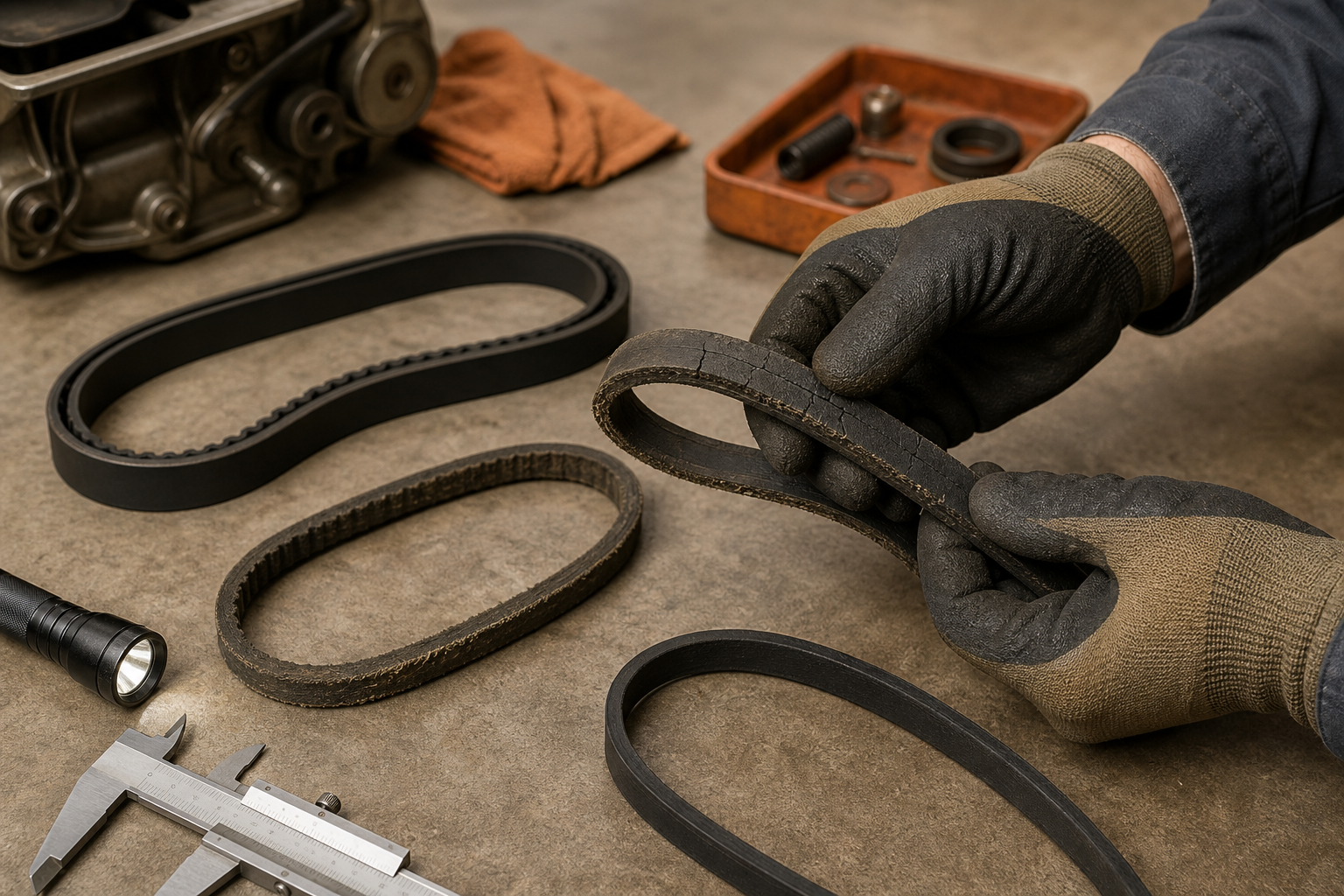
Belts are simple parts, but on tillers and mowers they do a lot of critical work. A worn drive belt can make a tiller stop pulling under load, while a weak deck belt can leave a mower with poor blade speed, uneven cut quality, or a squealing engagement. The key is knowing whether the belt itself is the problem or whether the real issue is a pulley, tensioner, or alignment fault that will quickly ruin a new belt. A careful inspection usually tells the story.
What Normal Belt Wear Looks Like
Most tillers and mowers use V-belts or covered belts designed to ride at a specific depth in the pulley groove. As they age, the belt material hardens, the sidewalls wear down, and the belt loses its ability to grip.
Here are the most common belt wear signs to look for:
- Glazing: The belt surface looks shiny or polished instead of slightly matte. This usually happens when the belt has been slipping and overheating. Glazed belts often squeal at startup or when blades engage.
- Cracking: Small cracks across the belt ribs or backing mean the rubber is drying out and losing flexibility. A few shallow weather cracks may appear with age, but deep or widespread cracking means replacement is due.
- Stretching: Belts do not truly “stretch” much like a rubber band, but over time they wear narrower and lose tension in the system. The result is similar: reduced grip, poor engagement, and inconsistent performance.
- Frayed edges or missing chunks: These usually point to misalignment, pulley damage, or debris contact. A belt in this condition should be replaced, but the root cause must be corrected first.
A good belt should sit properly in the pulley, feel flexible but firm, and show no burnt smell, severe polishing, exposed cord, or edge damage.
Symptoms That Usually Mean the Belt Is Worn Out
When the belt itself is the main problem, the machine will usually show predictable symptoms.
On a mower deck belt, common signs include:
- Blades slow down in tall grass
- Uneven cut or uncut strips
- Squealing when PTO or blade engagement is activated
- Belt smoke or hot rubber smell
- Visible glazing, cracking, or cord exposure
On a tiller drive or tine belt, watch for:
- Tines stop turning under load
- Machine hesitates or loses forward drive
- Engagement feels delayed or weak
- Belt slips only when the soil gets hard
- Repeated need to over-adjust cable or idler tension
If the belt is worn smooth on the sidewalls, riding too deep in the pulley, or loose even with the tension system adjusted correctly, replacement is the right move. In many homeowner machines, a belt that has seen one or more seasons of heavy heat, dust, and repeated slip is no longer dependable even if it is not fully broken.
A practical test: with the engine off and spark plug wire disconnected, inspect belt width against a new OEM-spec belt if possible. A visibly narrowed belt often causes slippage even before major cracks appear.
When the Real Problem Is a Pulley, Tensioner, or Alignment Issue
A new belt will not last long if the drive system has another fault. Certain wear patterns and symptoms point away from the belt alone.
Check for these clues:
- One edge of the belt is chewed up: Often caused by pulley misalignment, a bent bracket, worn spindle bearing, or improper belt routing.
- Belt flips or rolls over: Common with seized idlers, incorrect belt length, weak keepers, or major misalignment.
- Repeated belt breakage in the same area: Usually indicates a sharp pulley edge, debris in the sheave, frozen spindle, or damaged belt guide.
- Squeal continues after belt replacement: Likely due to weak tension, seized bearings, or oil contamination.
- Belt gets hot quickly without heavy load: Often points to dragging bearings or incorrect pulley contact.
Inspect pulleys closely. Look for:
- Rust buildup in grooves
- Sharp or burred pulley edges
- Wobble during rotation
- Seized or noisy idler bearings
- Grass buildup around deck spindles
- Bent belt guards or keepers contacting the belt
Also check alignment by sighting across pulley faces. On many mowers, even a slightly bent idler arm or bracket can force the belt to track sideways. On tillers, worn engagement linkages can prevent the belt from reaching full tension, making a good belt act bad.
How to Inspect Belts Correctly Before Ordering Parts
Before ordering a replacement, inspect the whole system so you buy the right belt and avoid repeat failures.
Follow this process:
- Shut off the engine and disconnect ignition power. Remove the spark plug wire on gas units.
- Remove guards or shields. On mowers, lower the deck if needed for better access. On tillers, remove belt covers completely.
- Rotate pulleys by hand. They should turn smoothly without grinding, wobble, or tight spots.
- Examine the belt all the way around. Look for glazing, cracks, frayed edges, flat spots, missing chunks, and exposed cords.
- Check belt fit in the pulley. A worn belt may sit too low in a V-pulley and lose sidewall grip.
- Inspect tension components. Springs, cables, idlers, and engagement arms must move freely and apply full tension.
- Confirm the part number. Use the model number from the machine, not just belt length. Outdoor power belts are often application-specific in width, angle, and construction.
For best results, replace belts with the correct OEM-spec equivalent rather than a generic hardware-store belt. Deck and drive systems often require clutching belts built to handle backside idlers, shock loads, and heat.
FAQ
How do I know if my mower belt is slipping or if the blades are dull?
Dull blades cause poor cut quality, but they do not usually create squealing, belt smoke, or a burning rubber smell. If blade speed drops in heavy grass and the belt looks shiny or overheats, belt slip is more likely.
Can I tighten a belt instead of replacing it?
Only to a point. If the system has an adjustment and the belt is still in good condition, restoring proper tension may help. But if the belt is glazed, cracked, narrowed, or slipping with correct adjustment, replacement is the better fix.
Should I replace pulleys when I replace the belt?
Not automatically. Replace pulleys, idlers, or tensioners if they wobble, grind, have sharp edges, seize, or show clear groove wear. A new belt on bad pulleys usually fails early.
§ Catalog
Shop the catalog