§ How-To
Saw Blade Selection for Cleaner, Faster Cuts
Help customers compare tooth counts, blade diameters, kerf, and arbor sizing for 6-1/2 inch and 7-1/4 inch circular saws. Explain when to use framing blades versus finish blades for plywood, trim, and general construction.
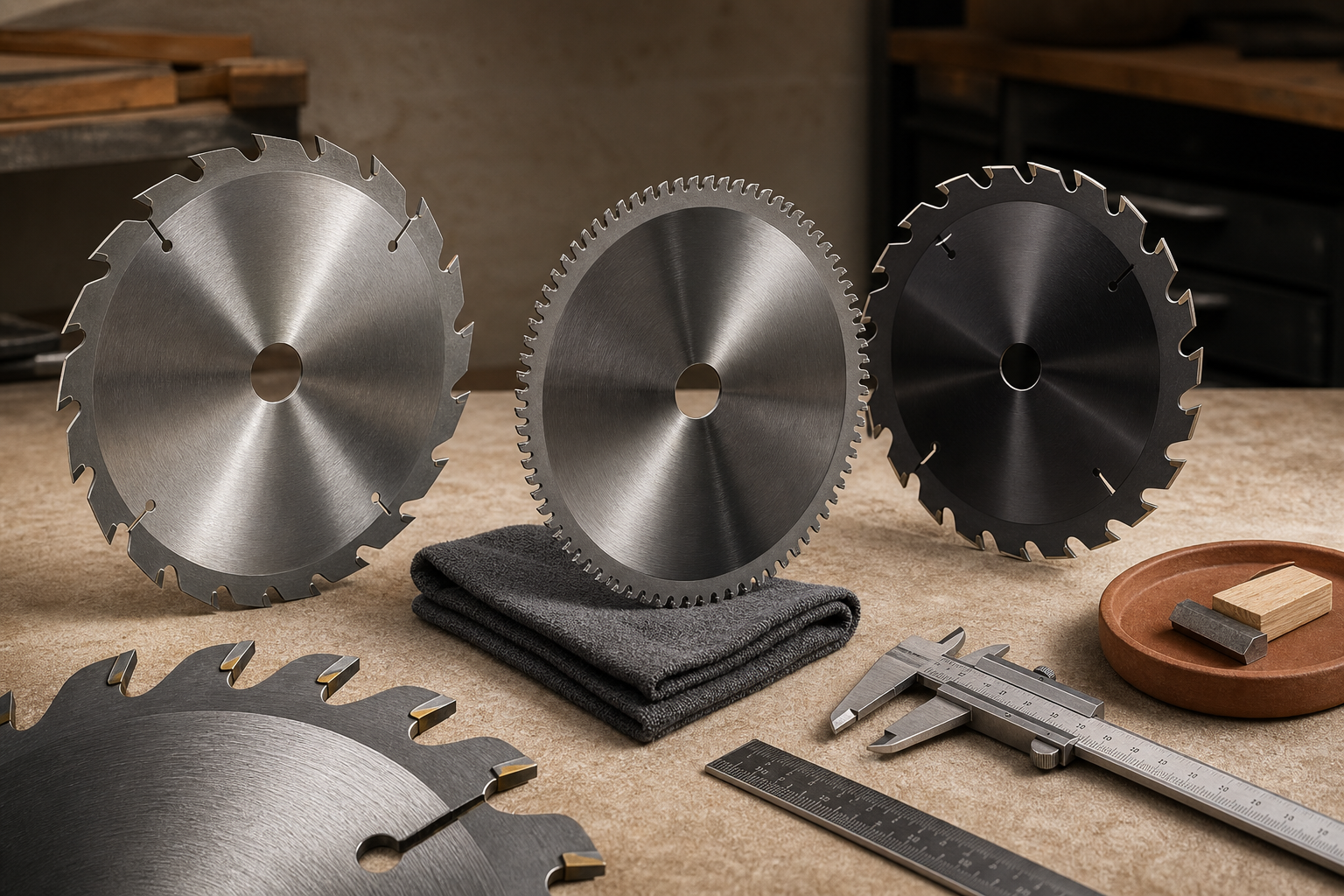
Choosing the right circular saw blade does more than improve cut quality—it also reduces strain on the saw, speeds up the work, and helps you waste less material. For homeowners, DIY remodelers, and working crews alike, the most important blade choices usually come down to four basics: diameter, arbor size, tooth count, and kerf. If you’re shopping for 6-1/2 inch or 7-1/4 inch circular saw blades, understanding how those specs affect framing lumber, plywood, trim, and general construction will help you get cleaner, faster, more predictable results.
Start With Diameter, Arbor Size, and Saw Compatibility
Before comparing tooth count or kerf, make sure the blade actually fits your saw. The two most common handheld circular saw blade sizes are 6-1/2 inch and 7-1/4 inch. A saw designed for one size should generally use that exact blade diameter. Installing the wrong diameter can affect cutting depth, guard operation, and safety.
Arbor size matters just as much. Many 7-1/4 inch circular saw blades use a 5/8 inch arbor, while many 6-1/2 inch blades are built around a smaller arbor pattern, often 20 mm on cordless saws. Always verify the blade bore matches the saw spindle exactly. If the arbor fit is loose, the blade can wobble, cut inaccurately, and wear prematurely.
A few practical compatibility tips:
- Match the blade diameter to the saw manufacturer’s rating
- Confirm arbor size from the saw manual or the old blade markings
- Check maximum RPM on the blade and make sure it meets or exceeds your saw’s no-load speed
- Verify blade orientation during installation so the teeth face the correct cutting direction
In general, 7-1/4 inch saws offer greater cut depth and a broader blade selection, which makes them common for framing and general construction. 6-1/2 inch saws are popular on cordless platforms because they’re lighter and easier to handle, especially for overhead work or quick punch-list cuts.
Tooth Count: Framing Blades vs Finish Blades
Tooth count has the biggest effect on cut speed and surface finish. Fewer teeth cut faster and clear chips more aggressively. More teeth cut slower but leave a smoother edge.
For framing and rough construction, a 16-tooth to 24-tooth blade is the usual choice. These blades are built to move quickly through dimensional lumber, pressure-treated boards, and sheet goods where edge appearance is less important than productivity. On a jobsite, this is the blade you want for wall framing, deck building, subfloor work, and general rip cuts.
For general-purpose use, many users prefer a 24-tooth to 40-tooth blade. This range gives a practical balance between speed and finish. If you regularly switch between lumber, plywood, OSB, and occasional trim stock, a mid-range blade can reduce blade changes while still delivering acceptable cut quality.
For cleaner cuts in plywood, finish carpentry, and trim, step up to a 40-tooth to 60-tooth blade. These finish blades produce less tear-out on veneered plywood, better edge quality on visible cuts, and smoother results in prefinished materials. They are a better choice for cabinet panels, shelving, lattice, and trim boards where splintering is a problem.
As a simple rule:
- 16T to 24T: fastest cuts in framing lumber and rough carpentry
- 24T to 40T: general construction and mixed material use
- 40T to 60T: plywood, trim, and cleaner finish work
If your main complaint is ragged plywood edges, a higher-tooth-count blade is usually the fix. If your saw feels slow in 2x lumber, you may be using too many teeth for the task.
Kerf Width and Why It Affects Speed and Battery Runtime
Kerf is the width of the cut the blade makes. A thin-kerf blade removes less material, so it takes less power to push through the cut. That makes thin-kerf blades especially useful on cordless 6-1/2 inch saws and smaller sidewinder saws, where efficiency matters.
Benefits of thin-kerf blades include:
- Faster feed rates with less effort
- Reduced load on the motor
- Longer battery runtime on cordless saws
- Less material waste
Standard-kerf blades are typically a little stiffer and may hold up better in demanding use, especially if the saw has plenty of power and the work involves long, repeated cuts in framing stock. On heavier-duty 7-1/4 inch saws, a standard kerf framing blade often tracks well in production work.
If you notice blade deflection, wandering cuts, or burning, kerf choice can be part of the issue—but so can feed pressure, dull teeth, or using the wrong blade for the material. For many users, a thin-kerf finish blade on plywood and a low-tooth-count framing blade for lumber is the most practical combination.
Choosing the Right Blade for Plywood, Trim, and General Construction
For framing lumber, pressure-treated boards, and quick construction cuts, use a framing blade with lower tooth count. It will cut faster, run cooler in thick stock, and clear sawdust better. This is the right choice when appearance is secondary.
For plywood, especially veneered or prefinished sheets, use a finish blade in the 40T to 60T range. You’ll get less top-surface tear-out and a noticeably cleaner edge. Supporting the sheet well and cutting with the good face down on most handheld circular saws can also improve results, since the blade enters from below.
For trim and visible finish materials, stay with a higher-tooth-count blade. If the saw is struggling, slow your feed rate rather than switching immediately to a coarse blade. A rougher blade may cut faster, but it usually leaves more splintering and cleanup.
For general construction, remodel work, and one-blade convenience, a quality combination blade in the mid-to-upper tooth range can be a smart compromise. It won’t match the speed of a dedicated framing blade or the polish of a dedicated finish blade, but it handles mixed-use work well.
FAQ
Can I use a 7-1/4 inch blade on a 6-1/2 inch circular saw?
No. Blade diameter must match the saw’s design specifications. Using an oversized blade can interfere with the guard, exceed safe cutting geometry, and create a serious hazard.
What tooth count is best for plywood?
For cleaner plywood cuts, a 40-tooth to 60-tooth blade is typically the better choice. It produces less tear-out than a coarse framing blade and is better suited for finish-grade sheet goods.
Is a thin-kerf blade better for cordless circular saws?
Usually, yes. Thin-kerf blades require less power, which can improve cut speed and help extend battery runtime. They’re a strong choice for 6-1/2 inch cordless saws and for users who want efficient cutting with less motor strain.
§ Catalog
Shop the catalog